
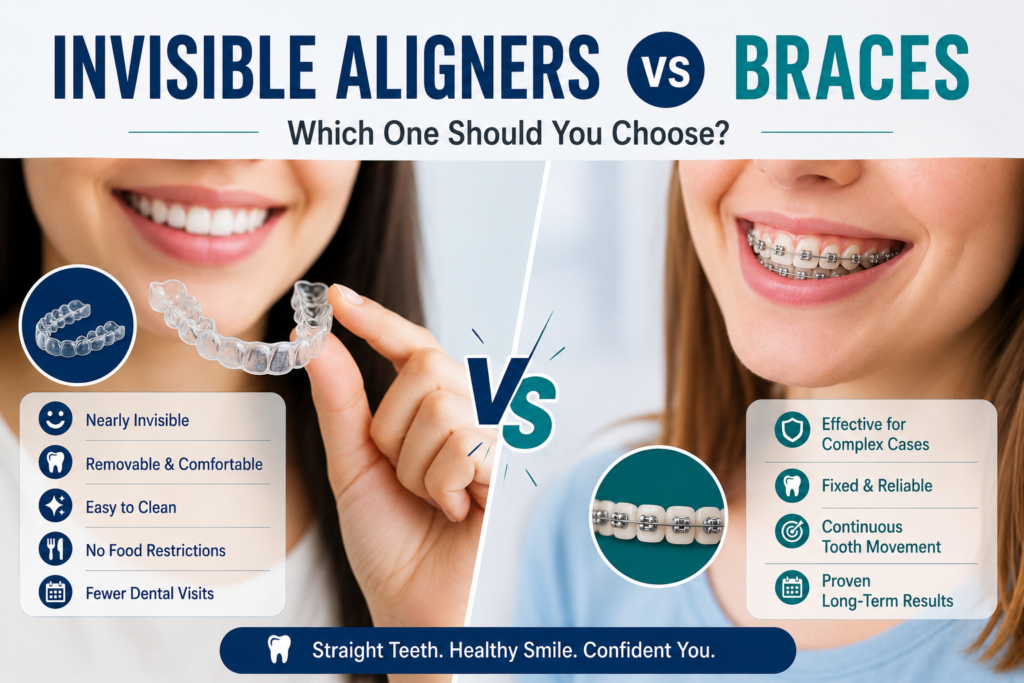
Invisible aligners are custom-made, transparent trays designed to gradually move teeth into their ideal positions. They are created using advanced digital technology and are almost invisible when worn, making them a popular choice among teenagers and adults who prefer a discreet orthodontic treatment.
Unlike traditional braces, aligners are removable, allowing patients to eat, brush, and floss without restrictions. Each set of aligners is worn for a specific period before progressing to the next set, gradually improving tooth alignment.
What Are Invisible Aligners?
Invisible aligners are custom-made, transparent trays designed to gradually move teeth into their ideal positions. They are created using advanced digital technology and are almost invisible when worn, making them a popular choice among teenagers and adults who prefer a discreet orthodontic treatment.
Unlike traditional braces, aligners are removable, allowing patients to eat, brush, and floss without restrictions. Each set of aligners is worn for a specific period before progressing to the next set, gradually improving tooth alignment.
Benefits of Invisible Aligners
Invisible aligners provide several advantages for patients looking for a comfortable and aesthetic teeth-straightening solution.
- Nearly invisible appearance
- Comfortable to wear
- Removable during meals
- Easy to maintain oral hygiene
- No food restrictions
- Customized digital treatment planning
- Suitable for busy professionals and adults
With proper wear and regular dental monitoring, invisible aligners can effectively correct mild to moderate orthodontic problems.
What Are Traditional Braces?
Traditional braces use metal or ceramic brackets attached to the teeth along with orthodontic wires that gradually shift teeth into proper alignment. Braces have been successfully used for decades and remain one of the most reliable orthodontic treatment options.
Modern braces are more comfortable and efficient than older systems and are capable of treating both simple and complex orthodontic conditions.
Benefits of Traditional Braces
Braces continue to be recommended for many patients because of their versatility and effectiveness.
- Effective for complex tooth alignment
- Suitable for severe bite correction
- Fixed treatment with continuous tooth movement
- Highly predictable results
- No risk of forgetting to wear them
- Long-established orthodontic treatment method
Braces provide consistent tooth movement because they remain attached throughout the treatment period.
Invisible Aligners vs Braces – Understanding the Differences
Although both treatments aim to straighten teeth, they differ significantly in several important areas.
Appearance
Invisible aligners are made from clear, transparent material, making them almost impossible to notice during conversations or photographs. This makes them an ideal choice for adults, college students, and professionals who want discreet orthodontic treatment.
Traditional braces use visible brackets and wires attached to the teeth. Ceramic braces offer a more aesthetic alternative than metal braces but are still more noticeable than clear aligners.
Comfort
Invisible aligners are designed with smooth edges that fit comfortably over the teeth. Since there are no metal brackets or wires, patients usually experience less irritation to the cheeks and lips.
Braces may initially cause mild discomfort or irritation as the mouth adjusts to the brackets and wires. However, this usually improves after a short period.
Oral Hygiene
One of the biggest advantages of invisible aligners is that they can be removed before brushing and flossing. This makes maintaining good oral hygiene much easier throughout treatment.
With braces, cleaning requires extra care because food particles and plaque can accumulate around brackets and wires. Specialized cleaning tools may be recommended to maintain proper oral hygiene.
Eating Habits
Patients using invisible aligners simply remove them before meals, allowing them to enjoy their regular diet without significant restrictions.
Patients with braces are generally advised to avoid sticky, hard, or crunchy foods that may damage brackets or wires during treatment.
Treatment Duration
The treatment time for invisible aligners varies depending on the complexity of the case and patient compliance. Wearing aligners for the recommended number of hours each day is essential for achieving the desired results.
Braces also require varying treatment durations depending on the severity of alignment problems, but they continuously apply corrective force because they remain fixed to the teeth.
Follow-Up Visits
Invisible aligner patients typically require periodic reviews to monitor progress and receive new aligner trays.
Patients wearing braces need regular orthodontic adjustments to tighten or modify the wires and ensure proper tooth movement.
Which Treatment Is Better for You?
Choosing between invisible aligners and braces depends on several individual factors. There is no single treatment that is best for everyone.
Invisible Aligners May Be Suitable If You:
- Prefer a discreet orthodontic treatment.
- Have mild to moderate alignment issues.
- Can wear aligners consistently for the recommended hours.
- Want fewer food restrictions.
- Value convenience and easier oral hygiene.
Traditional Braces May Be Suitable If You:
- Have severe crowding or bite problems.
- Require complex orthodontic correction.
- Prefer a fixed treatment option.
- May have difficulty remembering to wear removable aligners.
- Need continuous tooth movement for advanced cases.
A detailed orthodontic evaluation helps determine the most appropriate treatment for your dental condition.
Factors to Consider Before Choosing
Selecting the right orthodontic treatment involves evaluating multiple aspects beyond appearance.
Complexity of the Dental Problem
Simple alignment issues may respond well to invisible aligners, while more complicated orthodontic conditions may require traditional braces.
Lifestyle
Patients who frequently attend meetings, public events, or social gatherings often prefer invisible aligners because they are virtually invisible.
Children and younger teenagers who may not consistently wear removable aligners often benefit from fixed braces.
Oral Hygiene Habits
Maintaining excellent oral hygiene is easier with removable aligners. However, patients choosing aligners must remember to clean both their teeth and aligners regularly.
Braces require additional cleaning effort but can also produce excellent results when proper oral hygiene is maintained.
Commitment to Treatment
Invisible aligners must be worn for the recommended number of hours every day to achieve successful outcomes.
Braces remain attached throughout treatment, making them less dependent on patient compliance.
Benefits of Professional Orthodontic Consultation
Every smile is unique, and orthodontic treatment should always be personalized. A professional consultation allows the dentist or orthodontist to evaluate tooth alignment, jaw position, bite function, and overall oral health before recommending treatment.
Digital scans, photographs, and clinical evaluations help create a customized treatment plan that provides predictable and long-lasting results.
Professional guidance also helps patients understand treatment expectations, estimated timelines, and long-term maintenance requirements.
Caring for Your Teeth During Orthodontic Treatment
Regardless of whether you choose aligners or braces, maintaining good oral hygiene is essential for successful treatment.
Healthy Orthodontic Care Tips
- Brush after every meal whenever possible.
- Floss daily using recommended techniques.
- Attend scheduled dental appointments.
- Avoid damaging habits such as chewing ice or hard objects.
- Follow your orthodontist’s instructions carefully.
- Wear retainers after treatment as advised.
Proper care helps ensure healthy teeth and long-lasting orthodontic results.
Conclusion
Both invisible aligners and traditional braces are highly effective orthodontic treatments that help create straighter teeth, healthier bites, and more confident smiles. Invisible aligners offer excellent aesthetics, comfort, and convenience, while braces remain the preferred solution for treating more complex orthodontic problems.
The right choice depends on your oral health, lifestyle, treatment goals, and orthodontic needs. Consulting an experienced dental professional is the best way to determine which option is most suitable for achieving a healthy, well-aligned smile that lasts for years.