
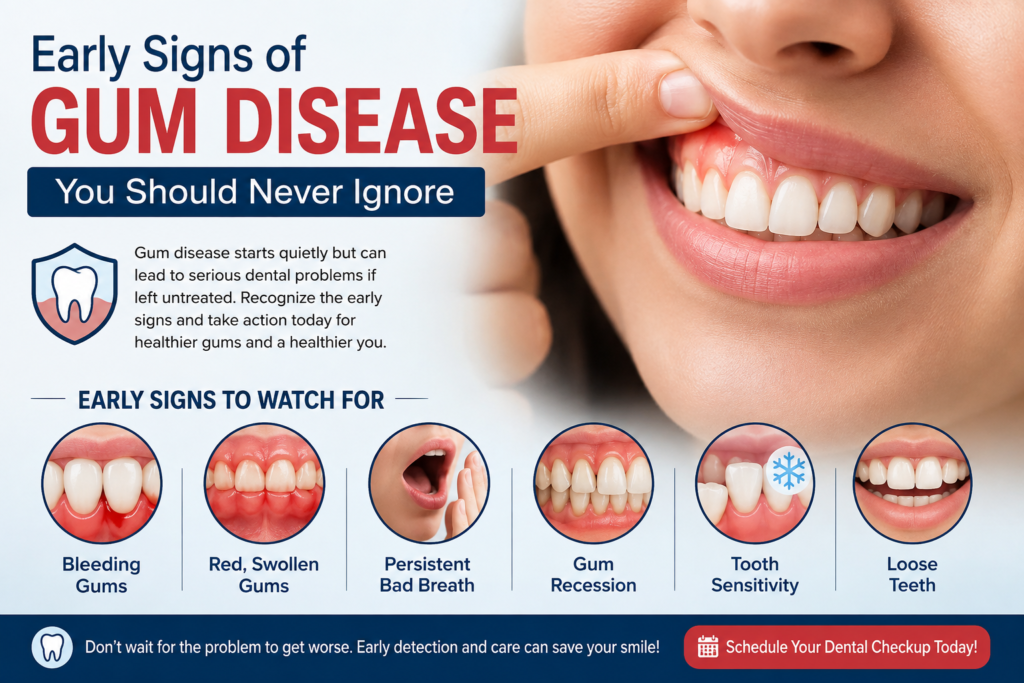
Healthy gums play a vital role in maintaining strong teeth and a confident smile. However, gum disease often develops silently, with mild symptoms that many people ignore. Occasional bleeding while brushing, swollen gums, or persistent bad breath may seem harmless, but they are often the earliest warning signs of gum disease. If left untreated, these symptoms can progress into a more serious condition called periodontal disease, which can damage the gums, supporting bone, and even lead to tooth loss.
According to the Centers for Disease Control and Prevention (CDC), nearly 50% of adults aged 30 and older are affected by some form of periodontal disease.The good news is that gum disease is preventable and, when detected early, can often be treated successfully. Understanding its symptoms and seeking timely dental care can help protect your oral health and avoid costly treatments in the future.
In this article, we’ll discuss the early signs of gum disease, its common causes, treatment options, preventive measures, and when you should visit a dentist.
What Is Gum Disease?
Gum disease, also known as periodontal disease, is a bacterial infection that affects the gums and the tissues supporting your teeth. It usually begins with plaque, a sticky layer of bacteria that forms on the teeth every day. If plaque is not removed through regular brushing and flossing, it hardens into tartar, allowing harmful bacteria to multiply and irritate the gums.
The earliest stage of gum disease is called gingivitis, which causes inflammation, redness, and bleeding of the gums. If gingivitis is left untreated, it can progress into periodontitis, a more severe condition that damages the gums, connective tissues, and jawbone supporting the teeth.
Early Signs of Gum Disease You Should Never Ignore
Bleeding Gums
Bleeding gums are one of the first signs of gum disease.Gums in good health should not bleed during regular brushing or flossing.Frequent bleeding usually indicates inflammation caused by plaque buildup along the gumline. Seeking treatment early can prevent the condition from progressing into advanced periodontal disease.
Swollen or Red Gums
If your gums appear swollen, red, or tender, it may be a sign of gingivitis. These symptoms occur because your body’s immune system is reacting to bacterial infection around the teeth. Early treatment can reverse gum inflammation and restore healthy gums.
Persistent Bad Breath
Bad breath that doesn’t improve after brushing or using mouthwash may indicate bacteria trapped beneath the gums. These bacteria produce unpleasant odors and continue to multiply if left untreated. Persistent bad breath is often one of the earliest symptoms of developing gum disease and should not be ignored.
Gum Recession
If your teeth appear longer than usual, your gums may be receding. Gum recession exposes the tooth roots, increasing the risk of tooth sensitivity and decay. It also creates spaces where bacteria can collect, making gum disease more difficult to control if treatment is delayed.
Tooth Sensitivity
When gums recede, the tooth roots lose their natural protection and become more sensitive to hot, cold, or sweet foods. Although sensitivity may have several causes, gum disease is a common reason for this discomfort. A dental examination can identify the exact cause and recommend appropriate treatment.
Loose Teeth
Loose or shifting teeth usually indicate that gum disease has affected the bone supporting the teeth. While this symptom often appears in advanced stages, even slight tooth movement should be evaluated by a dentist.
Pain While Chewing
Pain or discomfort while chewing may occur when inflammation spreads deeper into the gums and supporting tissues. Ignoring this symptom can allow the infection to worsen over time. Visiting a dentist promptly helps identify the cause and prevents more serious oral health complications.
What Causes Gum Disease?
The primary cause of gum disease is plaque, a sticky layer of bacteria that continuously forms on the teeth. When plaque is not removed through regular brushing and flossing, it hardens into tartar, which can only be removed through professional dental cleaning. The bacteria present in plaque and tartar irritate the gums, causing inflammation that may eventually develop into gum disease.
Several factors can also increase the risk of developing gum disease. Smoking or tobacco use, diabetes, hormonal changes during pregnancy, poor nutrition, dry mouth, certain medications, and a family history of periodontal disease can all make the gums more vulnerable to infection. Maintaining good oral hygiene and addressing these risk factors can significantly reduce the chances of developing gum disease.
Treatment Options for Gum Disease
Brushing your teeth twice a day with fluoride toothpaste and flossing daily helps remove plaque before it turns into tartar. Using a soft-bristled toothbrush and replacing it regularly also contributes to better gum health.
The treatment for gum disease depends on how early it is diagnosed. In the initial stage, known as gingivitis, professional dental cleaning combined with proper brushing and flossing is often enough to restore healthy gums. Dentists may also recommend antimicrobial mouth rinses to reduce harmful bacteria and prevent the infection from progressing.
If the disease has advanced to periodontitis, more specialized treatments such as scaling and root planing may be required. This deep-cleaning procedure removes plaque and tartar from below the gumline and smooths the tooth roots to encourage the gums to heal. In severe cases, antibiotics or periodontal surgery may be necessary to restore damaged gum tissue and supporting bone.
How to Prevent Gum Disease
Brushing your teeth twice a day with fluoride toothpaste and flossing daily helps remove plaque before it turns into tartar. Using a soft-bristled toothbrush and replacing it regularly also contributes to better gum health.
Regular dental checkups and professional cleanings play an important role in preventing gum disease. Eating a balanced diet rich in vitamins and minerals, drinking plenty of water, and avoiding tobacco products can further protect your gums. These simple daily habits help maintain healthy teeth, reduce bacterial buildup, and lower the risk of gum infections.
Risk Factors for Gum Disease
While anyone can develop gum disease, certain individuals are more likely to experience it due to specific lifestyle habits, medical conditions, or genetic factors. Understanding these risk factors can help you take preventive measures and seek timely dental care. Although some factors cannot be changed, maintaining good oral hygiene and visiting your dentist regularly can significantly reduce your risk of developing gum disease.
Smoking
Smoking is one of the most significant risk factors for gum disease because it reduces blood flow to the gums and weakens the body’s natural immune response. This makes it harder for the gums to fight bacterial infections and heal after damage has occurred. Smokers are also more likely to develop severe periodontal disease and experience tooth loss compared to non-smokers. Quitting smoking can greatly improve gum health and increase the success of periodontal treatment.
Diabetes
People with diabetes, especially those with poorly controlled blood sugar levels, are at a higher risk of developing gum disease. High blood sugar creates an environment where harmful bacteria can grow more easily, increasing the chances of infection. Diabetes also slows the body’s healing process, making it more difficult for inflamed gums to recover. Maintaining good blood sugar control and regular dental checkups can help lower this risk.
Age
The risk of gum disease naturally increases with age because plaque and tartar can accumulate over many years if oral hygiene is inconsistent. Older adults may also experience changes in gum tissue, dry mouth, or other health conditions that affect oral health. These factors make the gums more vulnerable to bacterial infections and inflammation. Regular dental examinations become even more important as you grow older to detect problems at an early stage.
Poor Dental Care
Poor oral hygiene is one of the most common reasons people develop gum disease. Skipping brushing, flossing, or routine dental cleanings allows plaque to build up along the gumline, eventually hardening into tartar. This buildup creates an ideal environment for bacteria to grow and irritate the gums. Following a consistent oral care routine and visiting your dentist regularly can help keep your gums healthy and prevent periodontal disease.
Family History
Genetics can also play a role in determining your risk of developing gum disease. Some individuals inherit traits that make them more susceptible to bacterial infections and gum inflammation, even if they maintain good oral hygiene. If gum disease runs in your family, it is important to inform your dentist and schedule regular checkups for early detection. Preventive care and professional cleanings can help reduce the impact of genetic risk factors on your oral health.
When Should You Visit a Dentist?
Many people ignore the early symptoms of gum disease because they are often mild and painless. However, delaying treatment can allow the infection to spread, leading to more serious problems such as gum recession, bone loss, and even tooth loss. You should schedule a dental appointment if you notice bleeding gums, persistent bad breath, swollen or painful gums, gum recession, tooth sensitivity, loose teeth, or pain while chewing. Early diagnosis and prompt treatment can help prevent complications, protect your gums, and preserve your natural smile.
Conclusion
Gum disease often begins with subtle symptoms that are easy to overlook, but recognizing these warning signs early can make a significant difference in protecting your oral health. Symptoms such as bleeding gums, swollen gums, persistent bad breath, gum recession, and tooth sensitivity should never be ignored, as they may indicate the early stages of periodontal disease. Timely diagnosis and appropriate treatment can help prevent the condition from progressing and reduce the risk of long-term complications.
Maintaining good oral hygiene, scheduling regular dental checkups, eating a balanced diet, and avoiding tobacco are some of the most effective ways to keep your gums healthy. If you notice any signs of gum disease, don’t wait for the symptoms to worsen. Consult your dentist as early as possible to receive the right treatment, protect your natural teeth, and maintain a healthy, confident smile for years to come.