
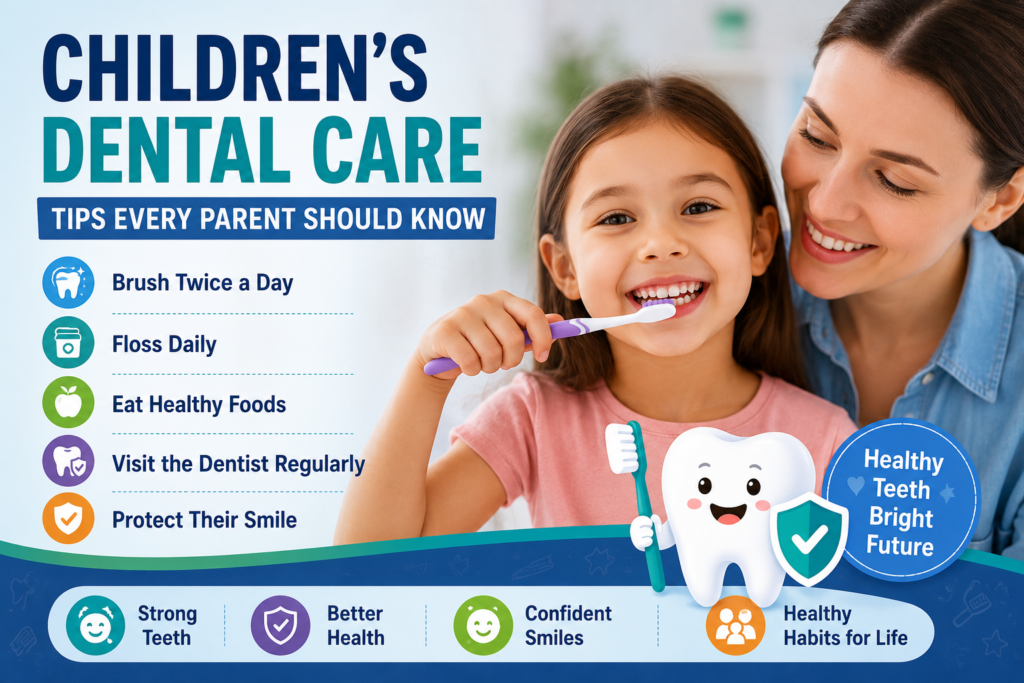
A child’s oral health plays an important role in their overall growth, nutrition, and confidence. Healthy teeth not only help children chew and speak properly but also guide the development of permanent teeth. Developing good dental habits at an early age can reduce the risk of cavities, gum problems, and other oral health issues later in life.
Many parents assume that baby teeth do not require much attention because they eventually fall out. However, healthy primary teeth are essential for maintaining proper spacing for permanent teeth, supporting speech development, and preventing infections that may affect future oral health.
By following simple preventive dental care practices and scheduling regular dental checkups, parents can help their children enjoy healthy smiles for years to come. Here are some important children’s dental care tips every parent should know.
Start Oral Care from Infancy
A child’s oral health plays an important role in their overall growth, nutrition, and confidence. Healthy teeth not only help children chew and speak properly but also guide the development of permanent teeth. Developing good dental habits at an early age can reduce the risk of cavities, gum problems, and other oral health issues later in life.
Many parents assume that baby teeth do not require much attention because they eventually fall out. However, healthy primary teeth are essential for maintaining proper spacing for permanent teeth, supporting speech development, and preventing infections that may affect future oral health.
By following simple preventive dental care practices and scheduling regular dental checkups, parents can help their children enjoy healthy smiles for years to come. Here are some important children’s dental care tips every parent should know.
Tips for Infant Oral Care
Before your child’s first birthday:
- Gently clean the gums using a soft, damp cloth after feeding.
- Begin brushing with a soft baby toothbrush once the first tooth appears.
- Use only a small amount of fluoride toothpaste as recommended by your dentist.
- Avoid putting babies to sleep with milk or juice bottles to reduce the risk of early childhood tooth decay.
Building healthy habits during infancy lays the foundation for lifelong oral health.
Teach Proper Brushing Techniques
Brushing correctly is one of the most effective ways to prevent cavities and gum disease. Children often need assistance with brushing until they develop the coordination to clean their teeth properly.
Parents should supervise brushing and encourage children to brush gently for at least two minutes, twice a day. Making brushing fun through colorful toothbrushes, music, or reward charts can motivate children to maintain good habits.
Healthy Brushing Habits
Encourage children to:
- Brush twice every day.
- Use a soft-bristled toothbrush.
- Brush all tooth surfaces gently.
- Replace the toothbrush every three months.
- Brush before bedtime without skipping.
Consistent brushing helps remove plaque, prevent cavities, and maintain healthy gums.
Make Flossing Part of the Daily Routine
Brushing alone cannot remove food particles trapped between teeth. Once two teeth begin touching, flossing becomes an important part of maintaining oral hygiene.
Teaching children how to floss early helps prevent plaque buildup, gum inflammation, and tooth decay in areas that toothbrushes cannot easily reach.
Benefits of Daily Flossing
Regular flossing helps:
- Remove trapped food particles.
- Reduce plaque buildup.
- Prevent cavities between teeth.
- Improve gum health.
- Maintain fresh breath.
Parents should assist younger children with flossing until they can perform it correctly on their own.
Encourage a Tooth-Friendly Diet
Nutrition plays a significant role in maintaining healthy teeth and gums. A balanced diet rich in vitamins and minerals helps strengthen developing teeth while reducing the risk of dental problems.
Frequent consumption of sugary snacks, chocolates, candies, and soft drinks increases the risk of tooth decay because harmful bacteria feed on sugar and produce acids that damage tooth enamel.
Foods That Support Healthy Teeth
Include foods such as:
- Milk and dairy products.
- Fresh fruits.
- Green leafy vegetables.
- Eggs.
- Nuts (age appropriate).
- Whole grains.
- Plenty of water.
Limiting sugary foods and encouraging healthy eating habits contribute to stronger teeth and improved overall health.
Schedule Regular Dental Checkups
Routine dental visits allow dentists to monitor your child’s oral development and identify potential problems before they become serious. Regular examinations also help children become comfortable visiting the dentist, reducing dental anxiety later in life.
Professional dental cleanings remove plaque and tartar that cannot always be eliminated through home care alone. Dentists can also provide preventive treatments and personalized advice based on the child’s age and dental condition.
Benefits of Routine Dental Visits
Regular checkups help:
- Detect cavities early.
- Monitor jaw and tooth development.
- Prevent gum disease.
- Receive professional cleaning.
- Build positive dental experiences.
Early dental care supports healthy smiles and minimizes the need for complex treatments in the future.
Protect Teeth During Sports and Play
Children who participate in sports or outdoor activities have a greater risk of dental injuries. Falls, collisions, and accidents may result in chipped, broken, or knocked-out teeth.
Using protective mouthguards during contact sports can significantly reduce the risk of dental trauma and help preserve healthy teeth.
Teach Children the Importance of Good Oral Hygiene
Children are more likely to maintain healthy habits when they understand why dental care is important. Parents should explain the benefits of brushing, flossing, and regular dental visits in simple and encouraging ways.
Creating positive dental routines at home helps children develop lifelong habits that protect their oral health well into adulthood.
Ways to Encourage Good Habits
Parents can:
- Brush together as a family.
- Use educational books or videos.
- Praise consistent brushing.
- Create fun brushing schedules.
- Reward healthy dental habits.
Positive reinforcement makes oral care enjoyable and encourages long-term consistency.
Why Preventive Dental Care Matters
Preventive dentistry focuses on maintaining healthy teeth rather than treating problems after they develop. Regular oral hygiene, balanced nutrition, fluoride protection, and routine dental visits all contribute to healthier smiles and fewer dental emergencies.
Children who receive preventive dental care often experience fewer cavities, healthier gums, improved speech development, and greater confidence in their smiles. Preventive care also helps reduce future treatment costs by identifying concerns early.
Parents play the most important role in helping children establish healthy dental habits that will benefit them throughout life.
Conclusion
Good oral health begins in childhood, and parents have a significant influence on developing healthy dental habits. Starting oral care early, teaching proper brushing and flossing techniques, encouraging nutritious eating, and scheduling regular dental checkups all contribute to strong teeth and healthy gums.
Simple daily habits can prevent many common dental problems and help children enjoy confident, healthy smiles as they grow. By making dental care a consistent part of your child’s routine, you are investing in their long-term oral health and overall well-being.