
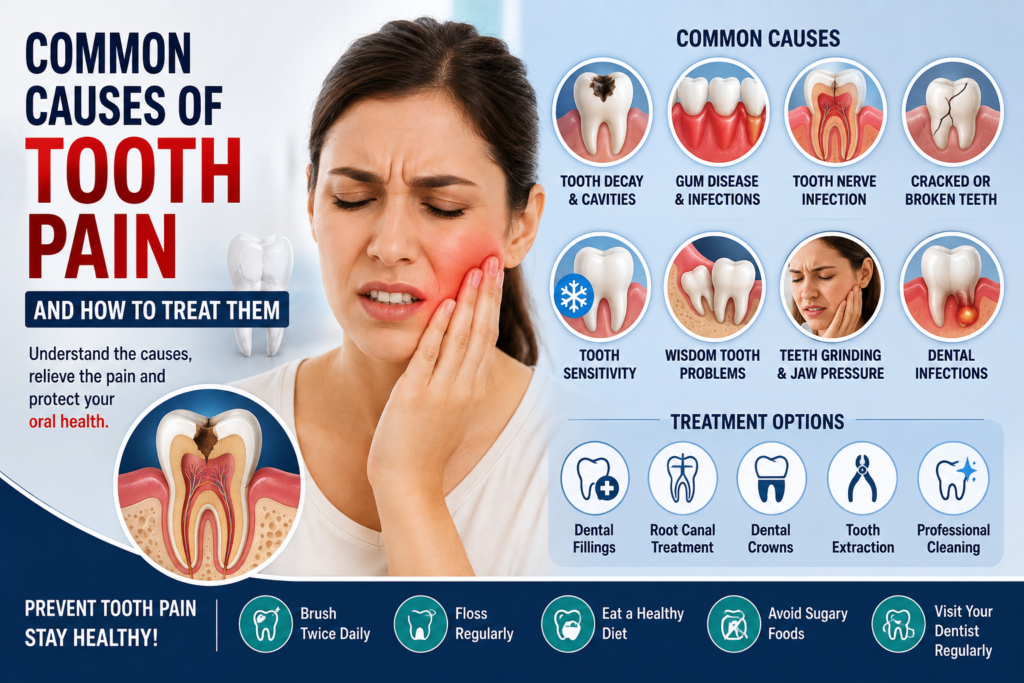
Tooth pain is one of the most common dental problems experienced by people of all age groups. It may begin as mild sensitivity and gradually develop into severe discomfort that affects eating, speaking, sleeping, and daily activities. Tooth pain is often a warning sign that something is affecting the health of your teeth, gums, nerves, or surrounding tissues. Ignoring the pain can lead to more serious dental complications, including infections, gum disease, and tooth loss.
Understanding the common causes of tooth pain and the available treatment options can help patients seek timely dental care and protect their long-term oral health. Early diagnosis and proper treatment not only relieve discomfort but also prevent dental conditions from becoming more severe.
Tooth Decay and Dental Cavities
Tooth decay is one of the leading causes of tooth pain. Cavities develop when plaque and bacteria gradually damage the outer enamel layer of the tooth. If left untreated, the decay can spread deeper into the inner layers of the tooth and affect the dental nerve, causing pain and sensitivity.
People with poor oral hygiene habits, excessive sugar consumption, and irregular dental checkups are at a higher risk of developing cavities. In the early stages, tooth decay may not cause noticeable symptoms, but as the damage increases, pain and sensitivity become more common.
Common Symptoms of Tooth Decay
Patients experiencing dental cavities may notice:
- Tooth sensitivity to hot or cold foods
- Pain while eating sweets
- Sharp toothache while chewing
- Visible holes or dark spots on teeth
- Bad breath caused by bacterial buildup
Treatment for Cavities and Tooth Decay
The treatment for tooth decay depends on the severity of the damage. Minor cavities are commonly treated using dental fillings to restore the tooth structure. If the decay reaches the inner pulp, root canal treatment may be required to remove the infection and preserve the natural tooth.
Maintaining proper brushing and flossing habits, along with regular dental checkups, can significantly reduce the risk of tooth decay and future dental pain.
Gum Disease and Gum Infections
Gum disease is another common cause of tooth pain and oral discomfort. It develops when plaque and bacteria accumulate around the gum line, causing inflammation and infection in the gums and supporting tissues. In the early stage, known as gingivitis, gums may become swollen, red, and sensitive. If untreated, gum disease can progress and affect the bone structure supporting the teeth.
Many patients ignore bleeding gums and mild discomfort until the condition becomes more serious. Advanced gum disease may lead to loose teeth, gum recession, and persistent oral pain.
Signs of Gum Disease
Common symptoms of gum disease include:
- Bleeding gums during brushing
- Swollen or tender gums
- Persistent bad breath
- Gum recession
- Pain around the gums or tooth roots
- Loose teeth in advanced stages
Treatment for Gum Disease
Professional dental cleaning helps remove plaque and tartar buildup that contribute to gum infection. In moderate to severe cases, deep cleaning procedures may be recommended to clean below the gum line and reduce bacterial growth.
Good oral hygiene practices and routine dental visits are important for maintaining healthy gums and preventing gum-related tooth pain.
Tooth Nerve Infection
A tooth nerve infection occurs when bacteria enter the inner pulp of the tooth. This condition often develops due to untreated cavities, cracks, or deep tooth damage. The infected nerve tissue becomes inflamed, causing intense pain and sensitivity.
Tooth nerve pain can worsen quickly if treatment is delayed. The infection may spread to surrounding tissues and lead to swelling or abscess formation.
Symptoms of Tooth Nerve Pain
Patients with nerve infection commonly experience:
- Severe throbbing tooth pain
- Pain while chewing or biting
- Swelling around the tooth or gums
- Sensitivity to hot and cold foods
- Continuous toothache that disrupts sleep
Treatment for Tooth Nerve Infection
Root canal treatment is one of the most effective solutions for treating infected tooth nerves. During the procedure, the infected pulp is removed, the tooth is cleaned, and the inner area is sealed to prevent further infection.
Early treatment helps preserve the natural tooth and provides long-term pain relief.
Cracked, Broken, or Damaged Teeth
A cracked or damaged tooth may expose the sensitive inner layers of the tooth and create pain while eating or drinking. Cracks can occur due to injuries, accidents, biting hard foods, or excessive teeth grinding.
Even small cracks can worsen over time if left untreated, increasing the risk of infection and nerve exposure.
Common Symptoms of Tooth Damage
Symptoms may include:
- Sharp pain while chewing
- Sensitivity to temperature changes
- Visible chips or cracks
- Intermittent tooth discomfort
- Swelling around the affected tooth
Treatment for Cracked Teeth
Treatment depends on the severity of the damage. Minor cracks may be treated using dental bonding, while larger fractures may require crowns or restorative dental procedures. Severe cases involving nerve damage may require root canal treatment.
Protecting teeth from injury and avoiding hard foods can help reduce the risk of tooth fractures.
Tooth Sensitivity and Enamel Wear
Tooth sensitivity occurs when the protective enamel layer becomes thin or damaged, exposing the underlying dentin layer. This condition can make teeth more sensitive to hot, cold, sweet, or acidic foods.
Sensitivity may develop due to aggressive brushing, acidic foods, teeth grinding, or gum recession.
Signs of Tooth Sensitivity
Patients may notice:
- Sudden pain while eating cold foods
- Sensitivity to hot beverages
- Temporary sharp discomfort
- Pain during brushing
Treatment for Sensitive Teeth
Dentists may recommend desensitizing toothpaste, fluoride applications, or protective dental treatments to strengthen enamel and reduce discomfort.
Maintaining gentle brushing habits and avoiding acidic foods can help protect tooth enamel and minimize sensitivity.
Wisdom Tooth Problems
Wisdom teeth often cause pain when they do not erupt properly or remain impacted beneath the gums. Impacted wisdom teeth can create pressure, swelling, and infection around surrounding teeth and tissues.
Many adults experience jaw discomfort and difficulty chewing due to wisdom tooth complications.
Symptoms of Wisdom Tooth Pain
Common symptoms include:
- Pain at the back of the mouth
- Swollen gums near wisdom teeth
- Jaw stiffness or discomfort
- Difficulty opening the mouth
- Infection around the tooth area
Treatment for Wisdom Tooth Problems
Dental evaluation and X-rays help determine the position of wisdom teeth. In many cases, wisdom tooth removal is recommended to prevent infection, crowding, and severe pain.
Early treatment can help avoid complications and maintain proper oral health.
Teeth Grinding and Jaw Pressure
Teeth grinding, also known as bruxism, can place excessive pressure on teeth and jaw muscles. Over time, this pressure may wear down tooth enamel and create pain in the teeth and jaw joints.
Stress, anxiety, and improper bite alignment are common contributing factors.
Symptoms of Teeth Grinding
Patients may experience:
- Jaw pain or tightness
- Headaches in the morning
- Tooth sensitivity
- Worn or flattened teeth
- Pain while chewing
Treatment for Teeth Grinding
Night guards, stress management techniques, and orthodontic treatments may help reduce grinding and protect teeth from further damage.
Early diagnosis can help prevent long-term complications related to jaw strain and tooth wear.
How to Prevent Tooth Pain
Preventing tooth pain starts with maintaining healthy oral hygiene habits and visiting the dentist regularly for preventive care. Many dental problems can be identified early before they develop into painful conditions.
Tips to Maintain Healthy Teeth and Gums
To reduce the risk of tooth pain:
- Brush teeth twice daily using fluoride toothpaste
- Floss regularly to remove plaque buildup
- Avoid excessive sugary foods and drinks
- Drink plenty of water
- Schedule routine dental checkups
- Treat cavities and gum problems early
- Avoid using teeth to open hard objects
Healthy oral care habits help protect teeth, gums, and dental nerves from infection and long-term damage.
When Should You Visit a Dentist?
Tooth pain should never be ignored, especially if it becomes severe or persistent. Professional dental evaluation is important when symptoms continue for more than a few days or interfere with daily activities.
You should visit a dentist if you experience:
- Persistent or severe toothache
- Swelling in the gums or face
- Bleeding gums
- Tooth sensitivity that worsens
- Pain while chewing
- Signs of infection or abscess
Early dental treatment can help relieve discomfort, protect natural teeth, and improve overall oral health.
Conclusion
Tooth pain can occur due to several dental conditions, including cavities, gum disease, nerve infections, cracked teeth, wisdom tooth problems, and enamel wear. Understanding the cause of the pain is important for choosing the right treatment and preventing further complications.
Maintaining proper oral hygiene, attending regular dental checkups, and seeking timely dental care can help keep your teeth and gums healthy for years to come. If you are experiencing tooth pain or sensitivity, consulting a qualified dental professional can help diagnose the issue early and provide effective treatment for lasting relief and improved oral health.