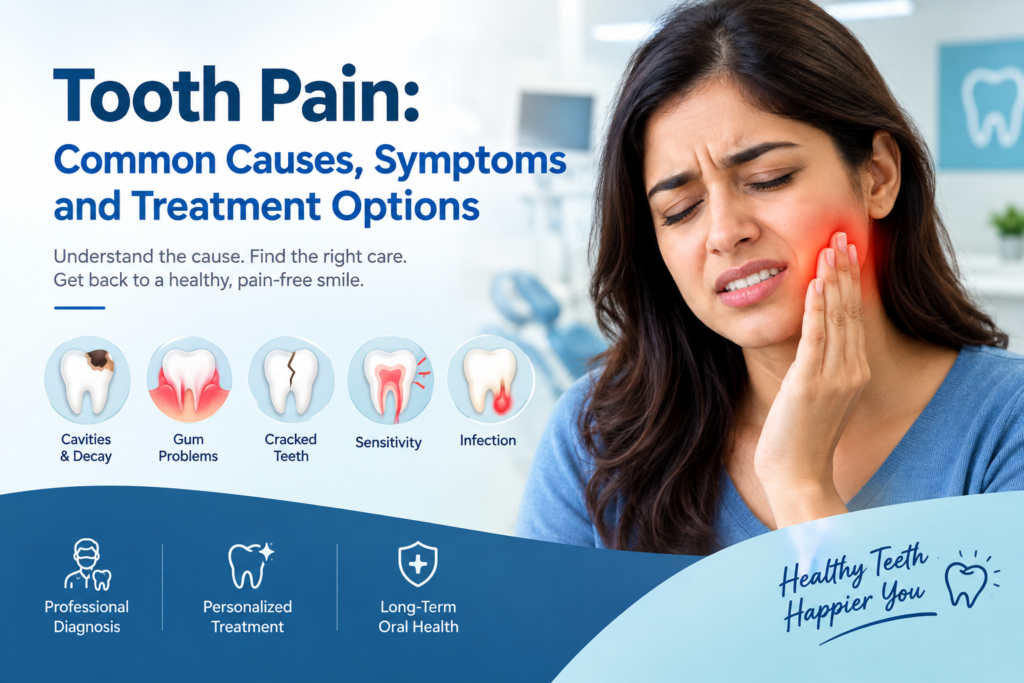
Tooth pain is a common dental problem that may cause pain when the tooth, gums or inner nerve become irritated or damaged. The discomfort can feel dull, sharp, throbbing or sensitive, especially while eating, drinking or biting. Common reasons include cavities, gum problems, cracked teeth, worn enamel and infection. Noticing how long the pain lasts and what triggers it can help you understand when a dental check-up may be needed.
Why Dental Pain Deserves Timely Attention
A toothache is more than an inconvenience when it keeps returning, affects sleep or makes chewing uncomfortable. Dental pain may be an early sign that a tooth, gum, filling or nerve needs attention. A timely dental check-up can help identify the source before the problem becomes more difficult to manage.
A dental visit is especially important when discomfort becomes stronger or appears with swelling, fever, a bad taste or pain when biting. An evaluation can help determine whether the cause is dental decay, sensitivity, gum disease, a cracked tooth, infection or another oral health concern before suitable care options are discussed.
What Are the Common Causes of Tooth Pain?
The same symptom can have different causes, so the location, duration, triggers and pattern of discomfort all matter during a dental screening.
Common Causes
Several dental conditions can irritate the tooth surface, gums or inner nerve tissue.
- Decay: Tooth decay can weaken enamel and create a cavity. As it moves deeper, hot, cold, sweet foods or biting may begin to cause discomfort.
- Infection: A dental infection can develop when bacteria reach the inner part of a tooth or nearby tissues. Pain may become constant and may occur with swelling or a bad taste.
- Cracks: A cracked tooth, broken filling or damaged crown can make biting painful and may expose sensitive parts of the tooth to temperature changes.
- Gums: Gum inflammation, recession or trapped food can cause soreness. Exposed roots may also lead to tooth sensitivity during eating or drinking.
Common Tooth Pain Symptoms and What They May Indicate
Pay attention to the pattern of tooth pain rather than judging the problem only by how strong the discomfort feels.
Common Symptoms
- Sharp: Brief pain with cold, hot, sweet or acidic foods may be linked to exposed dentin, worn enamel, a cavity or another source of sensitivity.
- Throbbing: A deep, pulsing ache that continues without a clear trigger needs attention, especially when swelling or fever is also present.
- Biting: Pain while chewing can occur with a crack, loose restoration, inflamed tissues or infection around the tooth or root.
- Radiating: Tooth nerve pain may sometimes feel as though it spreads toward the jaw, ear or nearby teeth, making the exact source difficult to identify without an examination.
How Dentists Diagnose Tooth Pain
A dentist usually asks when the tooth pain began, what makes it better or worse and whether it affects eating or sleep. The teeth, gums and existing restorations are then checked. Depending on the symptoms, the dentist may test the tooth’s response to pressure or temperature and may recommend an X-ray to look for decay, infection or changes around the root.
What Are the Treatment Options for Tooth Pain?
Tooth pain treatment depends on the cause. Temporary relief may reduce symptoms for a short period, but the underlying dental problem can still need care.
- Filling: A cavity that has not reached the inner nerve may often be treated by removing the damaged area and restoring the tooth with a suitable filling material.
- Canal: Root canal treatment may be considered when the pulp inside a tooth becomes inflamed or infected. The affected tissue is removed, the inside is cleaned and the tooth is sealed and restored.
- Gums: Professional cleaning or gum care may be needed when the source comes from inflamed gum tissue or debris around the tooth.
- Removal: A tooth that cannot be restored may sometimes need extraction. The dentist will evaluate the tooth, nearby tissues and available options before recommending removal.
When Tooth Pain Needs Immediate Attention
Schedule a dental visit when dental pain lasts more than a day or two, keeps returning, affects sleep or chewing or does not settle with pain relief. Seek care for swelling, fever, pain when biting, red gums or a bad taste. If swelling reaches your face or neck or breathing or swallowing becomes difficult, seek emergency medical care without delay.
What You Can Do Before Your Dental Visit
Simple home measures may make you more comfortable, but they should not replace an examination when symptoms continue.
- Rinse: Gently rinse with warm salt water to help keep the mouth clean. Do not swallow the rinse and avoid this method for young children.
- Clean: Brush gently with a soft toothbrush and keep the area clean. If food is trapped between teeth, careful cleaning may reduce local irritation.
- Diet: Choose softer foods and chew on the other side. Avoid very hot, very cold or sugary items if they trigger toothache or sensitivity.
- Relief: Use over-the-counter pain medicine only if it is suitable for you, following the label or professional advice. Do not place aspirin directly on the tooth or gums.
Expert Dental Care Based on the Cause
Persistent discomfort is easier to address when the cause is identified rather than guessed. A dentist may use an oral examination, tests or imaging to understand the problem and explain suitable options. Care may include restorations, gum treatment, sensitivity management, Root canal treatment or extraction when appropriate. A personalized care plan also helps patients understand priorities and protect nearby teeth.
Conclusion: Choose Timely Dental Care
Tooth pain may develop for several reasons, including decay, damaged teeth, sensitivity, gum problems or infection. The way the pain feels can offer useful clues, but a dental check-up is needed to find the exact cause and decide on suitable care.
If symptoms persist, worsen or affect eating or sleep, consider visiting Dr Seena’s Dental for evaluation. Book an appointment to discuss symptoms, understand the likely cause and review care options suited to your dental needs.