Healthy teeth depend on consistent daily care, but some areas of the mouth are harder to clean properly at home. Plaque can collect near the gumline, between teeth and around spots where a toothbrush may not fully reach. When this plaque forms into tartar, regular brushing and flossing cannot remove it completely. Professional dental cleaning removes these plaques and also allows the dentist to check the teeth, gums and other areas that may need special care.
Why Professional Dental Cleaning Is Important for Oral Health
Good oral hygiene starts at home, yet plaque can remain near the gumline, behind back teeth and between tight spaces. Over time, plaque may harden into tartar, which a toothbrush and floss cannot remove safely. Professional cleaning uses suitable dental instruments to clear these deposits from areas that are difficult to manage at home.
Once tartar is removed, professional dental cleaning also allows the dentist to assess gum health and identify areas that may need closer attention. This makes the visit a useful part of preventive dental care, as early changes can be noticed and patients can receive suitable guidance for maintaining their oral health at home.
What Is the Difference Between Professional Dental Cleaning and Home Cleaning?
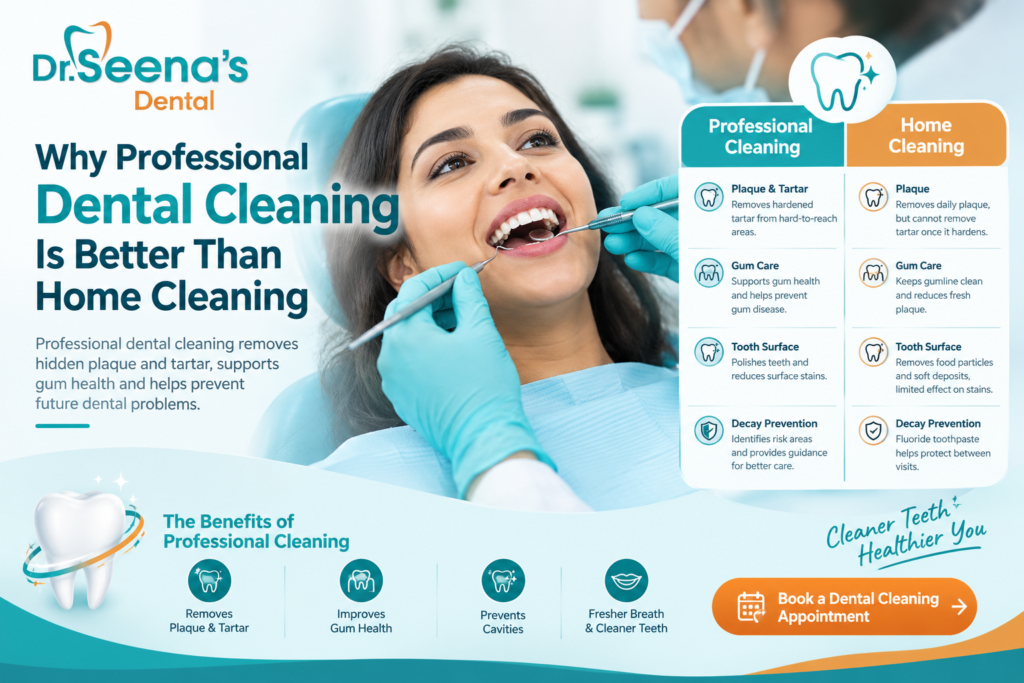
Both professional care and daily home cleaning support oral health, but they serve different purposes. Home care manages everyday plaque, while a dental visit can address buildup and areas that are difficult to clean properly.
- Plaque and Tartar
Professional Dental Cleaning: Professional plaque removal can clear hardened tartar from tooth surfaces and areas near the gumline.
Home Cleaning: Brushing and flossing remove daily plaque but cannot remove tartar once it hardens.
- Gum Care
Professional Dental Cleaning: Cleaning around the gumline can support gum disease prevention by reducing plaque and tartar buildup.
Home Cleaning: Daily brushing and flossing help keep the gumline clean and reduce fresh plaque.
- Tooth Surface
Professional Dental Cleaning: Teeth polishing may remove some surface stains and leave the tooth surface smoother after scaling.
Home Cleaning: Brushing helps remove food particles and soft deposits but has a limited effect on surface stains.
- Decay Prevention
Professional Dental Cleaning: The dentist can identify areas where plaque collects and provide guidance that supports cavity prevention.
Home Cleaning: Regular brushing with fluoride toothpaste helps protect teeth from decay between dental visits.
Why Daily Home Teeth Cleaning Is Important for Oral Health
Home teeth cleaning helps control the plaque that forms on teeth throughout the day. Brushing with fluoride toothpaste cleans the outer surfaces, while brushing and flossing together help reach the spaces between teeth and along the gumline. Following this routine regularly can reduce food debris and limit plaque buildup before it has time to harden.
Even with regular daily care, tartar cannot be removed once it has formed. Using extra pressure or sharp objects to scrape the teeth may damage the gums or tooth surface. Home care is most useful for preventing fresh buildup, while professional cleaning is needed when hardened deposits develop in areas that are difficult to reach safely.
What to Expect During a Professional Teeth Cleaning
The exact steps depend on gum condition, tartar formation, tooth sensitivity and existing dental care. A routine professional teeth cleaning usually starts with a careful check of the teeth and gums so the dentist can understand where buildup is present and whether any areas need extra care.
The next stage often involves scaling, which removes plaque and tartar from the tooth surfaces and along the gumline. Teeth polishing may be done afterward to smooth the surface and clear some external stains. Patients may also receive simple advice on brushing, flossing and cleaning between teeth based on their daily needs.
If the dentist finds signs of deeper gum problems, routine dental cleaning may not be enough. In such situations, further gum care may be discussed after examination. The type of cleaning recommended is based on the condition of the gums and the amount of buildup present.
When Should You See a Dentist for Dental Cleaning?
Consider seeing a dentist if your gums bleed often, bad breath continues despite regular brushing, or hard deposits are visible near the gumline. Professional dental cleaning may also be needed when tartar cannot be managed through daily care. If you notice pain, swelling, loose teeth or ongoing sensitivity, a dental examination can help identify whether another oral health problem needs attention.
How to Keep Your Teeth Clean Between Dental Visits
Professional care works better when daily habits limit new plaque buildup. These simple steps can help maintain a cleaner mouth between appointments and make regular dental cleaning easier to manage.
- Brush: Clean twice daily with fluoride toothpaste and gentle pressure, covering the gumline, back teeth and all visible tooth surfaces.
- Floss: Keep brushing and flossing in the same routine, or use an interdental cleaner recommended for the spaces between your teeth.
- Rinse: Use mouthwash only if suitable for you, and do not treat it as a replacement for brushing or cleaning between teeth.
- Review: Discuss the dental cleaning benefits with your dentist and ask how often you may need a visit based on your gum health, plaque buildup, braces or other oral care needs.
How Professional Teeth Cleaning Is Planned for Your Oral Health
At Dr Seena’s Dental, professional teeth cleaning is planned after checking gum health, tartar buildup, sensitivity and existing dental work. The dentist can then decide which areas need more attention and suggest suitable home-care steps afterward. This approach also helps determine whether routine cleaning is enough or whether further gum care may be needed.
Conclusion:
Daily plaque control and professional care work best together. Home habits help limit fresh buildup, while clinic cleaning removes hardened deposits and checks areas that may need extra attention. If tartar, bleeding gums, bad breath or hard-to-clean areas are a concern, consider visiting Dr Seena’s Dental for an oral health evaluation.