
Missing teeth can affect more than just your smile. They can impact chewing ability, speech, confidence, and overall oral health. Fortunately, modern dentistry offers several tooth replacement options, with dental implants and dental bridges being two of the most commonly recommended solutions.
Both treatments are designed to restore missing teeth and improve smile appearance, but they work differently and offer different benefits. Understanding the difference between dental implants vs bridges can help you make an informed decision based on your dental needs, budget, and long-term goals.
What Are Dental Implants?
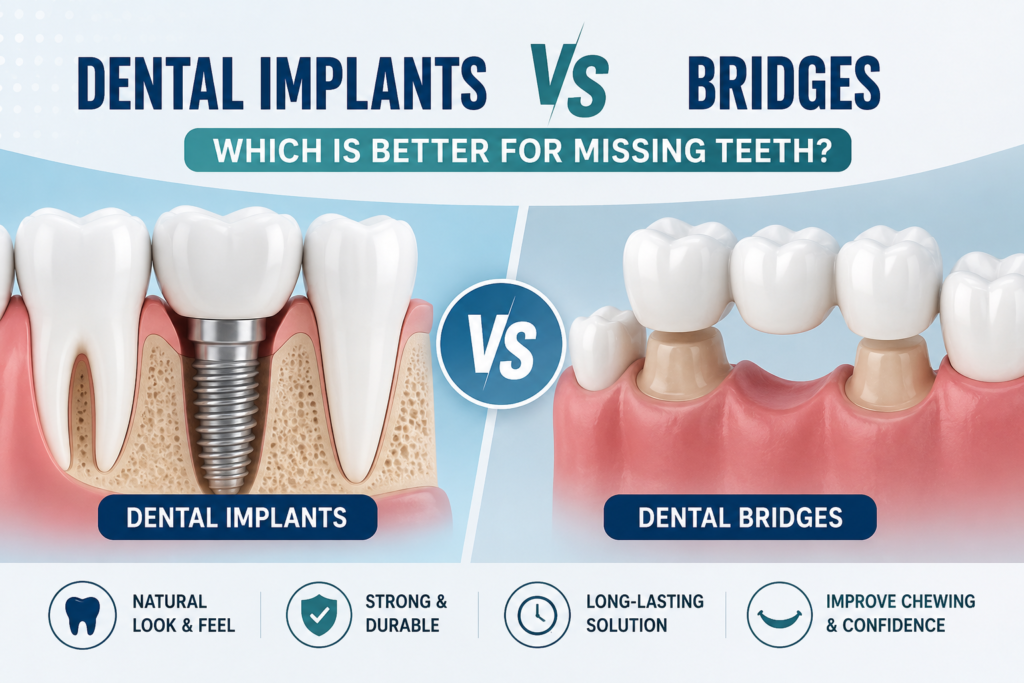
Dental implants are advanced tooth replacement solutions that replace missing teeth by using a small titanium implant placed into the jawbone. The implant acts as an artificial tooth root and supports a custom-made crown that looks and functions like a natural tooth.
Unlike traditional tooth replacement methods, dental implants replace both the visible tooth and the root structure. This helps provide better stability, natural appearance, and long-term support for the surrounding bone and tissues.
Dental implants are widely preferred by patients looking for a permanent solution for missing teeth because they provide strength, durability, and improved chewing function.
Benefits of Dental Implants
Dental implants offer several advantages for patients who want a long-lasting tooth replacement option:
- Natural-looking appearance
- Strong and stable tooth replacement
- Improved chewing ability
- Helps preserve jawbone health
- Does not require support from nearby teeth
- Long-term durability with proper care
Because implants are fixed into the jawbone, they provide a more natural feeling compared to removable tooth replacement options.
What Are Dental Bridges?
A dental bridge is a restoration used to replace one or more missing teeth by connecting an artificial tooth between two existing teeth. The surrounding teeth act as support for the bridge structure.
Dental bridges are a common and effective option for restoring missing teeth, especially when patients prefer a faster treatment process or are not suitable candidates for dental implants.
A bridge can improve smile appearance, restore chewing function, and prevent nearby teeth from shifting into the empty space.
Benefits of Dental Bridges
Dental bridges provide several benefits for patients with missing teeth:
- Faster treatment completion compared to implants
- Restores smile appearance
- Improves chewing function
- Prevents teeth from shifting
- Fixed and comfortable tooth replacement option
- Suitable for certain cases where implants are not recommended
Bridges remain a popular choice for patients looking for an efficient solution to replace missing teeth.
Dental Implants vs Bridges – Key Differences
While both dental implants and bridges help replace missing teeth, their treatment approach and long-term benefits are different.
Treatment Procedure
Dental implants require a surgical procedure where the implant is placed into the jawbone. After healing, a crown is attached to complete the restoration.
Dental bridges usually involve preparing the neighboring teeth and placing a customized bridge over them. The procedure is generally quicker compared to implants.
Durability and Longevity
Dental implants are considered one of the most durable tooth replacement solutions because they integrate with the jawbone and provide strong support.
Dental bridges can also last many years with proper oral hygiene, but their lifespan may depend on the condition of the supporting teeth and overall dental care.
Impact on Surrounding Teeth
One major advantage of dental implants is that they do not require altering nearby healthy teeth. The implant works independently and replaces the missing tooth without affecting surrounding structures.
Dental bridges require support from adjacent teeth, which may involve reshaping those teeth to hold the bridge securely.
Appearance and Comfort
Both dental implants and bridges can provide natural-looking results. However, implants often provide a more natural feel because they function similarly to natural teeth.
Patients usually experience improved confidence, comfort, and chewing ability with both options when the treatment is properly planned.
Which Option Is Better for Missing Teeth?
The best option between dental implants and bridges depends on several factors, including:
- Number of missing teeth
- Jawbone condition
- Overall oral health
- Budget considerations
- Treatment timeline
- Long-term dental goals
Dental implants are often recommended for patients looking for a permanent and independent tooth replacement solution. They are especially beneficial when the jawbone is healthy and sufficient to support the implant.
Dental bridges may be a suitable option for patients who need faster tooth replacement or when implants are not ideal due to certain dental conditions.
A professional dental consultation is important to determine which treatment option is best for your individual needs
Factors to Consider Before Choosing Dental Implants or Bridges
Choosing the right tooth replacement option requires careful evaluation of your dental health and lifestyle requirements.
Oral Health Condition
Healthy gums and sufficient jawbone support are important for dental implant success. Patients with gum disease or bone loss may need additional treatments before considering implants.
Treatment Duration
Dental implants usually require more time because the implant needs time to bond with the jawbone. Bridges can often be completed faster.
Maintenance Requirements
Both implants and bridges require regular brushing, flossing, and dental checkups. Maintaining good oral hygiene helps improve the lifespan of the restoration.
Long-Term Investment
Although dental implants may involve a higher initial investment, their durability and natural function often make them a valuable long-term solution.
Why Choose Professional Dental Care for Tooth Replacement?
Replacing missing teeth requires accurate diagnosis, advanced treatment planning, and experienced dental care. A qualified dental professional evaluates your oral health, explains suitable options, and helps you choose the right solution.
Modern dental clinics use advanced technology to improve treatment accuracy, comfort, and long-term outcomes. Personalized treatment planning ensures that the final restoration matches your smile, bite, and functional needs.
How to Maintain Your Tooth Replacement After Treatment
Proper care is essential to protect your dental implants or bridges and maintain healthy oral function.
Helpful Care Tips:
- Brush twice daily with proper technique
- Floss regularly around the restoration
- Avoid habits like chewing hard objects
- Schedule regular dental checkups
- Maintain healthy gums
- Follow your dentist’s aftercare instructions
Good oral care helps protect your restoration and supports long-lasting dental health.
Conclusion
Both dental implants and bridges are effective solutions for replacing missing teeth, but the right choice depends on your individual dental condition and treatment goals. Dental implants provide a permanent, stable, and natural-feeling solution, while dental bridges offer a faster and reliable restoration option.
A professional dental consultation can help determine whether implants or bridges are better suited for your smile. With the right treatment approach, missing teeth can be replaced effectively, helping restore confidence, comfort, and long-term oral health.