
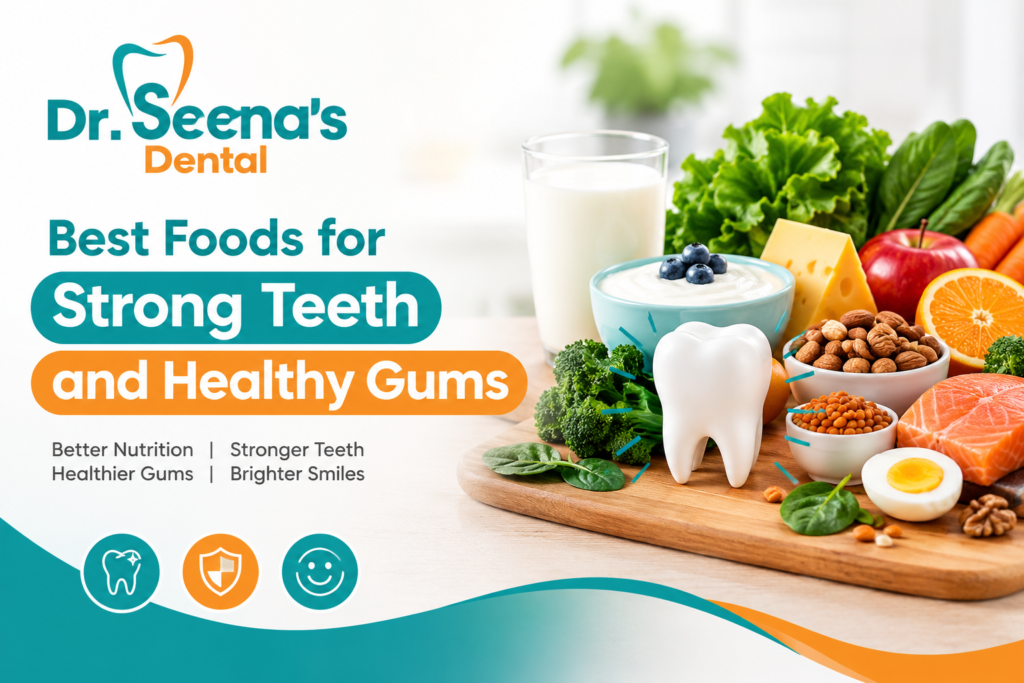
A healthy smile starts with daily habits, and the food on your plate is one of them. Choosing the Best foods for strong teeth can help supply minerals and vitamins that support enamel, gum tissue, and saliva production. No food prevents every dental problem, but balanced meals, fluoride toothpaste, and routine dental visits help protect your mouth. Dr Seena’s Dental shares practical choices for everyday meals.
Why Nutrition Matters for Your Smile
Teeth need minerals such as calcium and phosphorus to maintain their hard outer layer, while gums rely on nutrients that support healthy tissue. Saliva also plays an important role: it washes away food particles and helps neutralise acids produced by mouth bacteria. Water supports this natural cleaning process, whereas frequent sugary snacks and acidic drinks can increase the risk of enamel damage and cavities.
Aim for repeatable habits and choose tooth-friendly foods more often than sugary snacks.
A Guide to Foods for Strong Teeth and Healthy Gums
Food item | Benefits |
Milk, yogurt and cheese | Supply calcium and phosphorus; cheese may stimulate saliva. |
Leafy greens | Supply nutrients such as folate and calcium. |
Apples, carrots and celery | Chewing stimulates saliva, but it does not replace proper brushing. |
Fatty fish | Provides vitamin D, which helps the body absorb calcium. |
Eggs | Provide protein and help meet daily vitamin D needs. |
Nuts and seeds | Provide minerals and healthy fats; choose unsweetened options. |
Beans and lentils | Supply protein and minerals. |
Guava, oranges and other vitamin C-rich produce | Support gum tissue; rinse with water after acidic fruit. |
Water | Helps rinse the mouth; fluoridated water can help protect enamel where available. |
1. Choose Calcium-Rich Dairy Foods
Milk, plain yogurt, and cheese are useful options when planning Foods for healthy teeth and gums. Calcium helps maintain the structure of teeth, and phosphorus contributes to mineral balance. Plain yogurt also contains protein, while cheese can encourage saliva production. If you avoid dairy, consider calcium-fortified alternatives and check their labels for calcium and added sugar.
Choose unsweetened products where possible, as flavoured yogurt and sweetened milk may contain added sugar.
2. Add Vegetables and Crunchy Produce
Carrots, celery, cucumber, and leafy vegetables add fibre and valuable nutrients to meals. Chewing firm vegetables increases saliva flow, which helps clear some food debris and neutralise acids. These foods are useful Foods that strengthen teeth naturally as part of a varied diet, although they cannot repair cavities or remove plaque as effectively as brushing and flossing.
Add spinach to omelettes, dal, soups, or a lunch side. For children, cut firm produce into age-appropriate pieces to reduce choking risk.
3. Include Fruit and Vitamin C Sources
Vitamin C helps maintain gum-supporting tissue. Guava, berries, kiwi, capsicum, and citrus fruit contribute to daily intake. Foods that support healthy gums as part of a balanced diet. Whole fruit usually offers more fibre than juice.
Acidic fruit can temporarily soften enamel. Eat it with meals, avoid sipping juice all day, rinse with water, and wait about 30 minutes before brushing.
4. Get Vitamin D, Protein, and Minerals
Vitamin D helps the body absorb calcium, and protein supports tissues throughout the body. Eggs and suitable fish options can contribute these nutrients, while beans, lentils, nuts, and seeds provide protein and minerals. These choices support Nutrition for healthy teeth alongside vegetables, whole grains, and adequate hydration.
Nutrient needs vary. If you suspect a deficiency, consult a healthcare professional before taking high-dose supplements; they do not replace balanced meals or dental care.
Plan a Balanced Diet for Healthy Teeth and Gums
A practical Diet for healthy teeth and gums includes regular meals, water, and fewer sugary snacks. Try oatmeal with plain yogurt for breakfast, lentils and vegetables at lunch, and eggs, beans, or fish with vegetables at dinner. Suitable snacks include cheese, plain yogurt, or nuts.
Sugar frequency matters: mouth bacteria turn sugars into acids, and repeated snacking increases acid exposure. Keep sweets to occasional mealtimes and never put sugary drinks in a child’s bedtime bottle. Choose water over soda, sweetened tea, or juice.
Simple Swaps for the Whole Family
Healthy eating for dental health does not have to mean expensive ingredients or complicated recipes. Add grated carrots to rice dishes, mix beans into soups, or serve plain yogurt with breakfast. If children prefer sweet flavours, offer whole fruit more often than sweets and keep water easy to reach. Adults can make similar changes by replacing one sugary drink with water and choosing a balanced snack before hunger leads to frequent grazing. Make changes gradually so they fit your household’s routine and budget.
Foods and Habits to Limit
No food guarantees cavity prevention. Limit frequent sweets, sticky candy, biscuits, sweetened cereals, and sugary drinks. Dried fruit is nutritious but sticky and concentrated in sugar, so eat it with meals. Sports and energy drinks can also be acidic.
For Foods to prevent tooth decay, reduce repeated sugar exposure rather than avoiding all carbohydrates or fruit. Drink water after meals, brush twice daily with fluoride toothpaste, clean between teeth, and follow your dentist’s advice.
How to Make Tooth-Friendly Choices Easier
Keep fruit and chopped vegetables ready, carry water, check labels for added sugar, and choose plain dairy or fortified alternatives. Variety matters more than one superfood. These habits make tooth-friendly foods part of your everyday diet.
The Best foods for strong teeth work alongside oral hygiene. Seek dental advice for bleeding gums, ongoing sensitivity, toothache, swelling, or persistent bad breath.
Ask your dentist for advice tailored to your age, medical history, medications, dietary needs, and any current dental concerns or symptoms.
1. What are the Best foods for strong teeth?
2. Which foods help keep gums healthy?
3. Can food alone prevent tooth decay?
4. Are apples enough to clean teeth?
5. What should I drink for better oral health?
Support Your Smile With Everyday Choices
Healthy teeth and gums depend on balanced meals, water, and oral hygiene not one miracle ingredient. Choose dairy or calcium-fortified alternatives, vegetables, whole fruit, protein-rich foods, and unsweetened drinks. For personalised guidance, contact Dr Seena’s Dental.