Regular dental checkups help you understand the condition of your teeth, gums and overall mouth health. During these visits, a dentist can review changes in the teeth, gums and bite while also discussing daily cleaning habits. The importance of dental checkups comes from noticing early signs of concern, reviewing oral hygiene and planning suitable preventive care. They also help you know what appears healthy, what needs attention and when further dental care may be useful.
Why Regular Dental Checkups Matter for Long-Term Oral Health
Some dental concerns can develop without noticeable pain or visible signs. An oral health checkup allows the dentist to examine the teeth and gums for decay, gum inflammation, damaged fillings, cracks, sensitivity and other changes that may need attention. Comparing findings from one visit to another can also make it easier to notice changes over time.
Preventive dental care may also include guidance on brushing, cleaning between the teeth, food habits and other factors that affect oral health. If plaque has hardened into tartar, a dental cleaning may be suggested because normal brushing cannot remove it. The dentist can then recommend follow-up based on your current oral health, previous dental concerns and individual risk factors.
Why Dental Checkups Are Important for Preventive Oral Care
Importance of Dental Checkups
Regular dental visits give patients a clearer picture of their oral health and help dentists notice changes that may not yet cause pain. They also support preventive care by reviewing hygiene habits, checking existing dental work and guiding suitable follow-up based on individual needs.
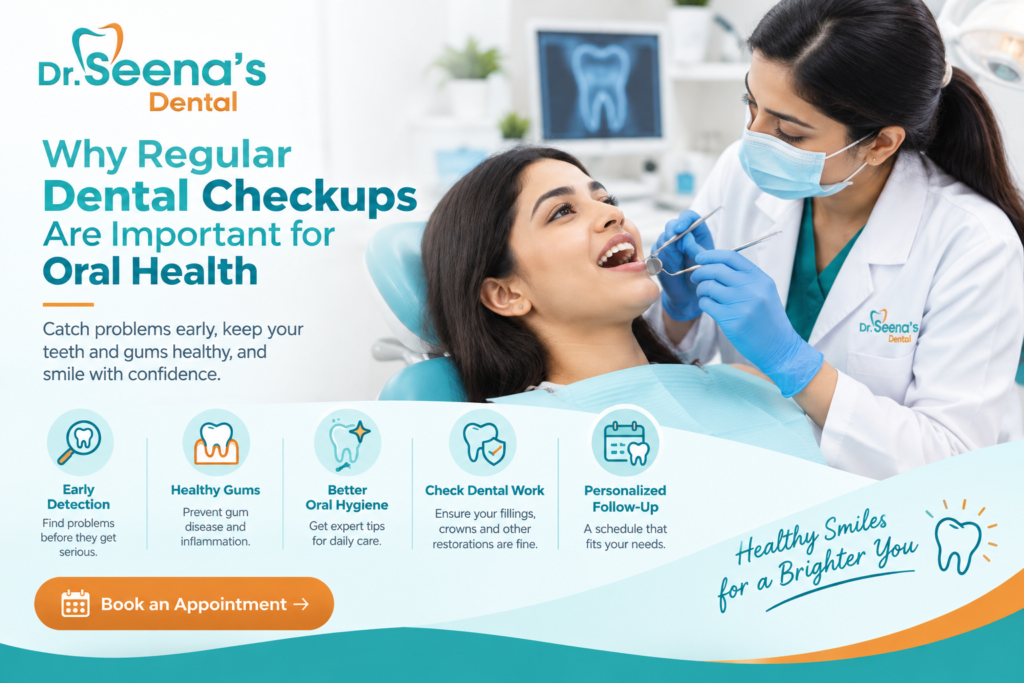
- Early Detection: Dental checkups can help identify decay, gum changes, cracks or damaged fillings before they become more noticeable.
- Gum Health: Regular reviews allow the dentist to look for bleeding, swelling or plaque buildup that may affect the gums.
- Oral Hygiene: A dentist can review brushing and cleaning habits and suggest practical changes that may improve daily plaque control.
- Dental Work: Fillings, crowns, bridges or other restorations can be checked for wear, looseness or changes that may need attention.
- Follow-Up: The dentist can recommend when to return based on current findings, previous dental concerns and individual oral health needs. suggest me where to add this para
What to Expect During a Routine Dental Screening
A routine dental examination is a careful review of your teeth, gums, mouth and oral-care needs. Further tests may be suggested only when they can provide useful information about a concern that cannot be fully assessed during the visual examination.
- Teeth: The dentist checks for decay, cracks, worn surfaces, chipped teeth, damaged fillings, loose restorations and other changes that may affect comfort or chewing. Finding these changes early can help determine whether they should be monitored or treated.
- Gums: The gums are checked for redness, swelling, bleeding and changes around the teeth. These findings can show whether home cleaning needs improvement or whether plaque, tartar, gum inflammation or another concern may need more attention.
- Mouth: The tongue, cheeks, lips, roof of the mouth and other soft tissues may be examined for sores, patches, swelling or unusual changes. Some areas can be difficult to see clearly during normal brushing at home.
- History: Your dentist may ask about pain, sensitivity, medicines, general health, diet, tobacco use and oral-care habits. This information adds useful context and helps the dentist understand factors that may be affecting your teeth or gums.
How Dentists Decide If Dental X-Rays Are Needed
Dental X-rays are not required at every appointment. A dentist may recommend them when more information is needed about areas that cannot be examined clearly by sight alone. The decision may depend on symptoms, current findings, age, previous dental work and the risk of tooth or gum problems.
The dental checkup benefits go beyond identifying existing concerns. A visit can also show what appears stable, what may need monitoring and whether changes in home care, cleaning or further treatment should be considered. This gives patients a clearer picture of their current oral health rather than waiting for pain before seeking advice.
How Often Should You Visit a Dentist?
The right schedule for regular dental checkups depends on your oral health, previous dental concerns and individual risk factors. Some people may need more frequent reviews because of gum problems, repeated decay, braces, implants or complex dental work. Others with stable oral health may be advised to return after a longer interval.
You should consider an earlier visit if you develop tooth pain, bleeding gums, swelling, sensitivity, a broken tooth, a loose filling or a mouth sore that does not improve. Plaque and tartar may sometimes need professional cleaning, while pain, swelling or damaged teeth may require a different type of assessment.
Simple Habits That Make Dental Visits More Useful
Daily oral care works best when it is consistent and supported by clear information during dental visits. A few simple habits can help you care for your mouth between appointments and make discussions with your dentist more useful.
- Brush: Brush twice a day with fluoride toothpaste and pay attention to the gum line and back teeth. Gentle brushing helps control plaque without placing unnecessary pressure on the gums. Repeated bleeding or discomfort should be discussed with a dentist.
- Clean: Clean between the teeth each day using floss or an interdental aid that suits your mouth. If deposits have hardened around the teeth, dental cleaning may be recommended, but it does not replace daily plaque control at home.
- Notice: Pay attention to bad breath, bleeding, sensitivity, food trapping, rough edges, gum changes or a difference in how your teeth meet. Remembering when a change started can help your dentist understand the concern more clearly.
- Prepare: Share any medicines, health changes, previous dental work or concerns about treatment. You can also ask about brushing technique, gum care, diet or sensitive areas so the advice you receive is relevant to your everyday routine.
Professional Dental Care for Better Oral Health
Modern dental care combines careful assessment, suitable equipment and clear communication to help patients understand their oral health. At Dr Seena’s Dental, the dental team can review changes in the teeth and gums, explain findings in simple terms and discuss next steps based on symptoms, dental history and individual needs.
A dental cleaning may be advised when plaque and tartar have collected in areas that daily brushing cannot fully reach. Other findings may need monitoring, further tests or treatment. The type of care suggested depends on what is found during the examination rather than following the same approach for every patient.
Conclusion: Maintain Better Oral Health
Keeping up with regular dental checkups can help you understand changes in your mouth, improve daily hygiene habits and seek care before discomfort becomes the only reason to visit a dentist. Routine reviews also provide an opportunity to discuss cleaning, sensitivity, gum health and other concerns.
If you have noticed bleeding gums, sensitivity, persistent discomfort or have not had a checkup recently, visiting Dr Seena’s Dental can provide a clearer understanding of your oral health and whether any further care may be needed.